


A publicly listed stock trading at 50% of NAV is not automatically cheap. Many remain cheap for years.
In early 2023, we spent time on Concordia Maritime, a small-cap listed Swedish shipping company. On paper, the opportunity appeared straightforward:
Underlying fleet value materially above enterprise value
Strong demand for tankers in a booming second-hand market
A large discount to calculated net asset value
But valuation was not the hard part.
The real question was whether that value could actually be realised, or whether it would remain trapped in a persistent public-market discount without clear execution and shareholder agency.
New to Holon Capital?
We publish in-depth research on overlooked, unloved and misunderstood public companies, drawing on our own investment process.
Subscribe for free to receive future Deep Dives, Case Studies and Essays.
Why This NAV Discount Was Actionable
What differentiated this situation was agency.
Stena Sessan, Concordia’s dominant shareholder, had both the economic incentive and the practical ability to influence the outcome. Importantly, this was not a thesis dependent on a hypothetical future event.
Concrete actions were already underway:
Asset sales were being completed above book value, with further disposals announced
Debt was being actively reduced
The fleet and balance sheet were being simplified
These actions occurred independently of any buyout speculation and materially improved downside protection.
At the same time, the second-hand tanker market was booming. Older quality tonnage was attracting strong demand, prices had risen sharply and vessels could be sold into a highly liquid seller’s market.
In this environment, it was economically rational for management to act opportunistically and accelerate asset disposals.
To assess both the realisable value and liquidity of the remaining fleet, we consulted an independent tanker valuation specialist. Their assessment supported the view that the vessels were worth materially more than their book values and could be sold within a reasonable timeframe.
This gave us confidence that the asset value was not merely theoretical. It could be converted into cash, allowing balance-sheet simplification to translate into realised shareholder value.
With a controlling shareholder willing and able to act, the outcome became a question of execution and oversight, not simply valuation.
That distinction was central to our conviction.
Why the Market Stayed Skeptical
Despite the apparent discount, the stock remained largely ignored. Contributing factors included:
Limited liquidity and small-cap status
A shrinking fleet and declining revenues that screened poorly on growth metrics
General fatigue with active investing
Insufficient scale for many institutional investors to deploy meaningful capital
In our view, these factors explained why the discount existed, but not why it should persist, given the asset sales, debt reduction and capital discipline already in progress.
Valuation at Entry - February 2023
At the beginning of 2023, Concordia Maritime operated four P-MAX product tankers.
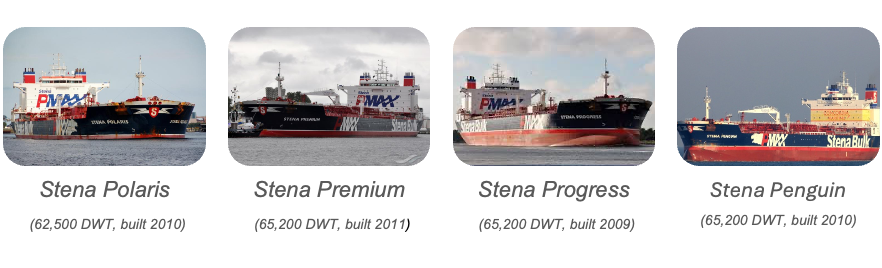
Independent third-party appraisals implied an aggregate fleet value of USD 110.0 million.
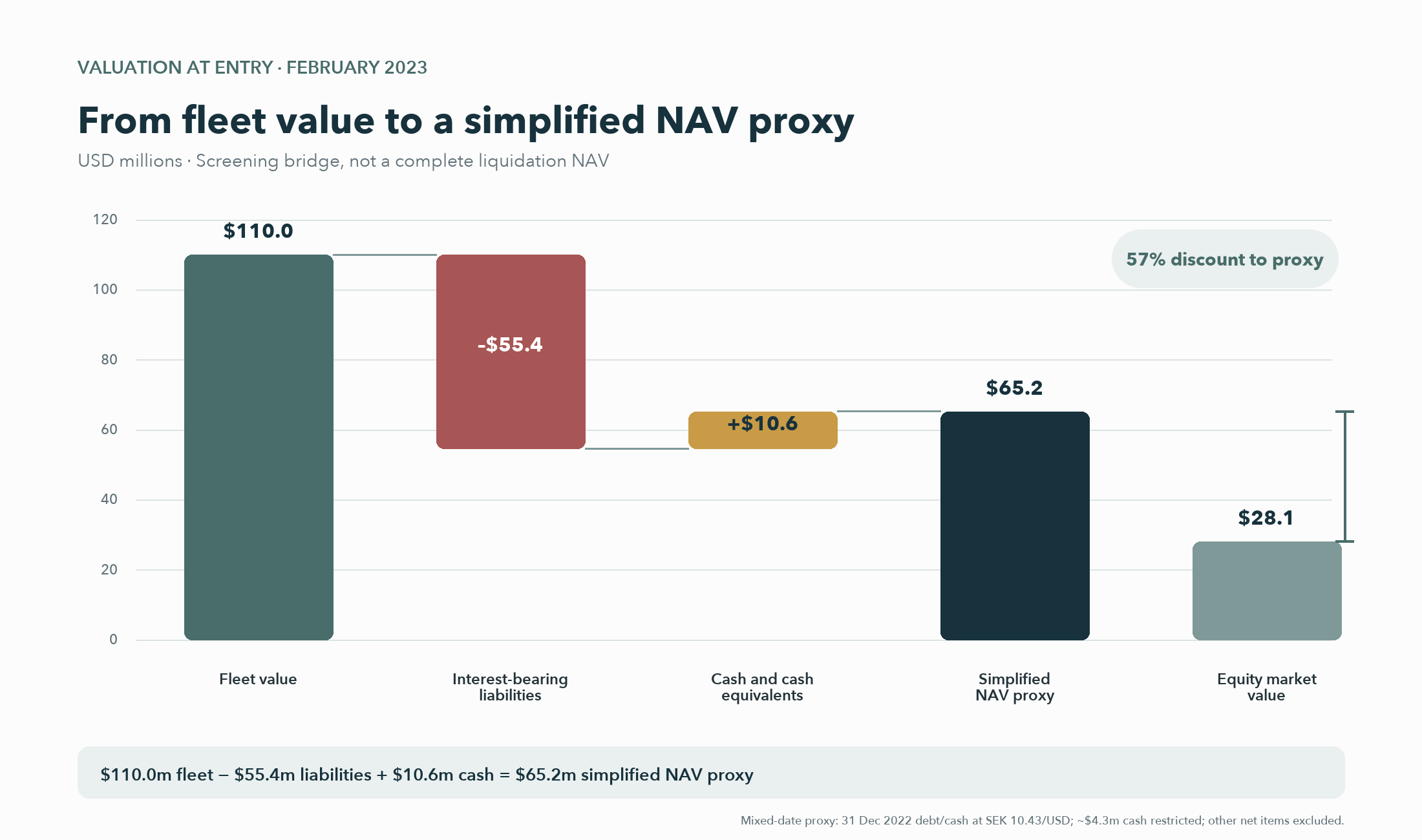
57% Discount to Net Asset Value
Cash and short-term assets: USD 10.6 million
Interest-bearing liabilities: USD 55.4 million
Implied net asset value: approximately USD 65.2 million
This estimate excluded the further increase in second-hand tanker values during the year.
At our entry price of SEK 6.15:
Market capitalisation: approximately USD 28.1 million
Discount to NAV: 57%
Once execution risk had been sufficiently mitigated, the discount created a highly asymmetric payoff profile without relying on further freight-rate increases, improving sentiment or multiple expansion.
Key Risks Considered
The principal risks were not limited to asset values. They were governance, execution and inertia:
Execution momentum slowing or management reversing course
Cash being redeployed inefficiently rather than returned to shareholders
Value remaining trapped in the public market
The controlling shareholder pursuing an outcome that did not maximise value for minority investors
We were comfortable with these risks because of the substantial margin of safety, management’s demonstrated willingness to simplify the balance sheet and the largest shareholder’s significant economic interest.
That interest was meaningful, although not perfectly aligned with minority shareholders.
Outcome
We initiated a position in February 2023 at an average price of SEK 6.15 and exited in December 2023 at SEK 9.65 following the buyout announcement by Stena Sessan.
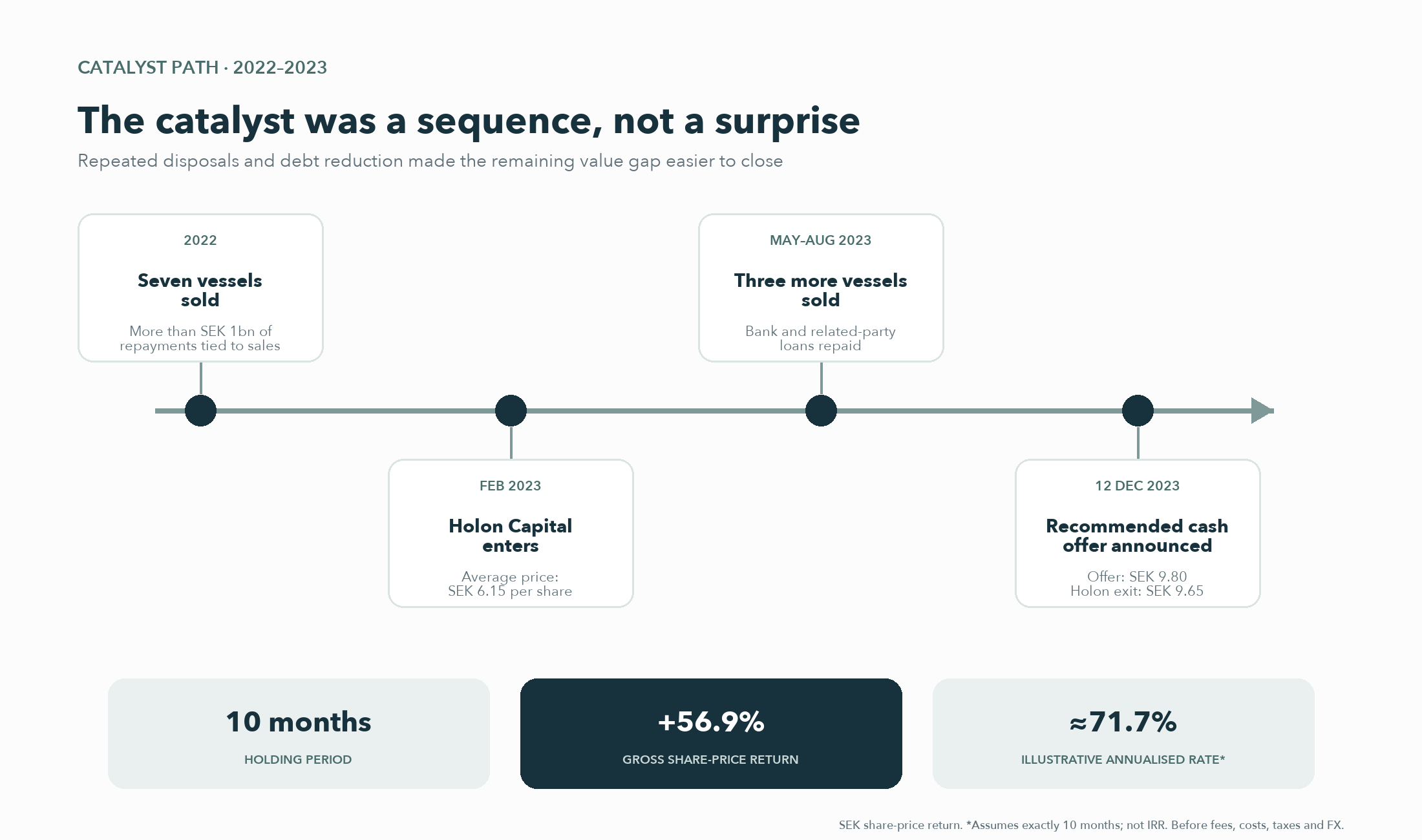
Holding period: approximately 10 months
Gross share-price return: 56.9%
Illustrative annualised return: 71.7%
The buyout accelerated and crystallised a value-realisation process that was already visible through vessel sales, debt reduction and balance-sheet simplification.
February 2023: Initiated at SEK 6.15
December 2023: Exited at SEK 9.65 following the buyout announcement
What Drove the Outcome
Cheapness alone does not produce returns. Execution does.
This case reflects how we approach deep-value special situations: not by hunting for discounts, but by identifying who has the incentive, authority and ability to close them.
Subscribe to receive future Deep Dives, Case Studies and Essays. If you found this analysis valuable, liking and sharing are simple ways to support our work.
Thank you for reading.
Disclaimer: This publication is for informational and educational purposes only. Nothing herein constitutes investment advice, a recommendation, or an offer or solicitation to buy or sell any security or interest in any fund. Views expressed are our own as of the date of publication and may change without notice. Holon Capital and its affiliates may hold positions in securities discussed. Investing involves risk, including the loss of principal. Past performance is not indicative of future results. Readers should conduct their own research and consult their own professional advisers before making investment decisions. Holon Capital does not accept compensation from companies in exchange for publishing research.